
Typography
Letters of
Central Europe.
A collection of typefaces drawn from the aesthetics of Poland and Austria, circa 1897 to 1939 — from the Vienna Secession and Młoda Polska movements to the Art Deco styles of the 20s and 30s.
Featured in The Cosmopolitan Review and on Creative Market's Blog.
Poland · 1908–1939
Polish Art Deco & Young Poland
Faces drawn from posters, documents, and printed ephemera of the Młoda Polska (Young Poland) movement and the Art Deco years of the Second Polish Republic.
Typeface no. 01
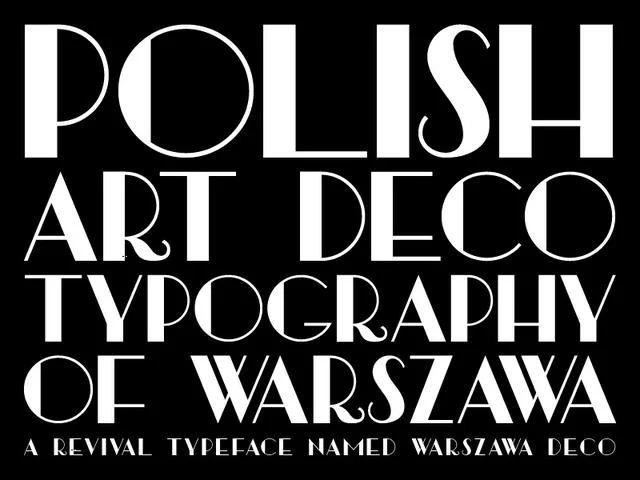
Warszawa Deco
A typeface based on a document from 1939. Polish Art Deco and modernism of the Interwar period.
Buy "Warszawa Deco"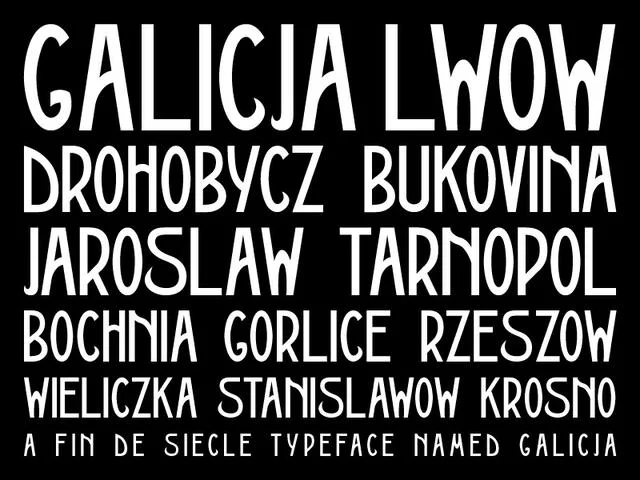
Typeface no. 02
Galicja
Polish "Młoda Polska" (Young Poland) Art Nouveau / Secession styles of the early 20th century. Based on a 1911 poster from the Piller-Neumann printshop in Lwów (present-day Lviv).
Buy "Galicja"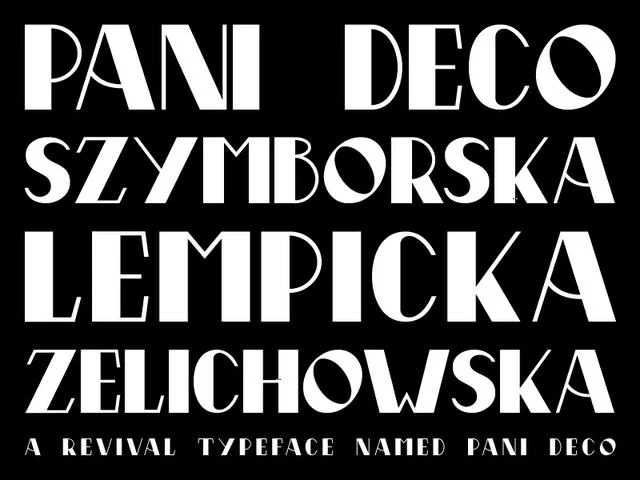
Typeface no. 03
Pani Deco
Based on a poster designed in 1928 by Polish artist Anna Harland-Zajączkowska. Polish Art Deco and modernism of the Interwar period.
Buy "Pani Deco"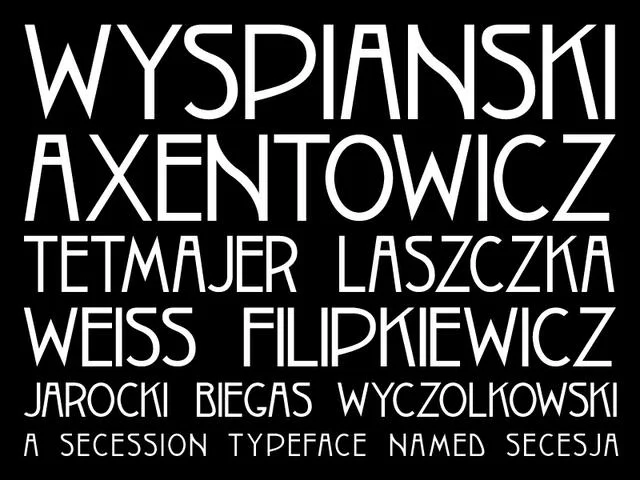
Typeface no. 04
Secesja
Polish "Młoda Polska" (Young Poland) Art Nouveau / Secession styles. Based on a poster printed in 1908 by an unknown artist.
Buy "Secesja"Font in use
Secesja at the Museum of Fine Arts, Boston
The MFA Boston used Secesja throughout the identity for its major exhibition Klimt & Schiele: Drawn — from the exterior banners on Huntington Avenue to the introductory gallery wall.
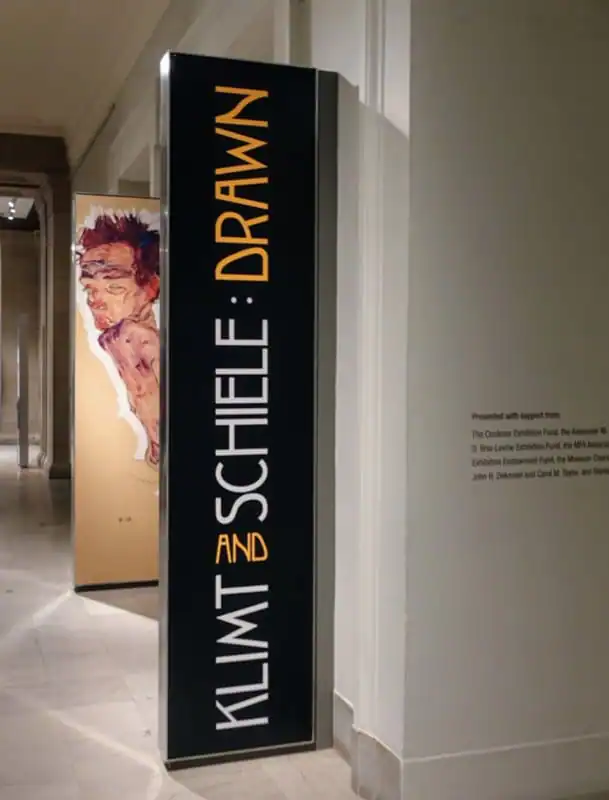
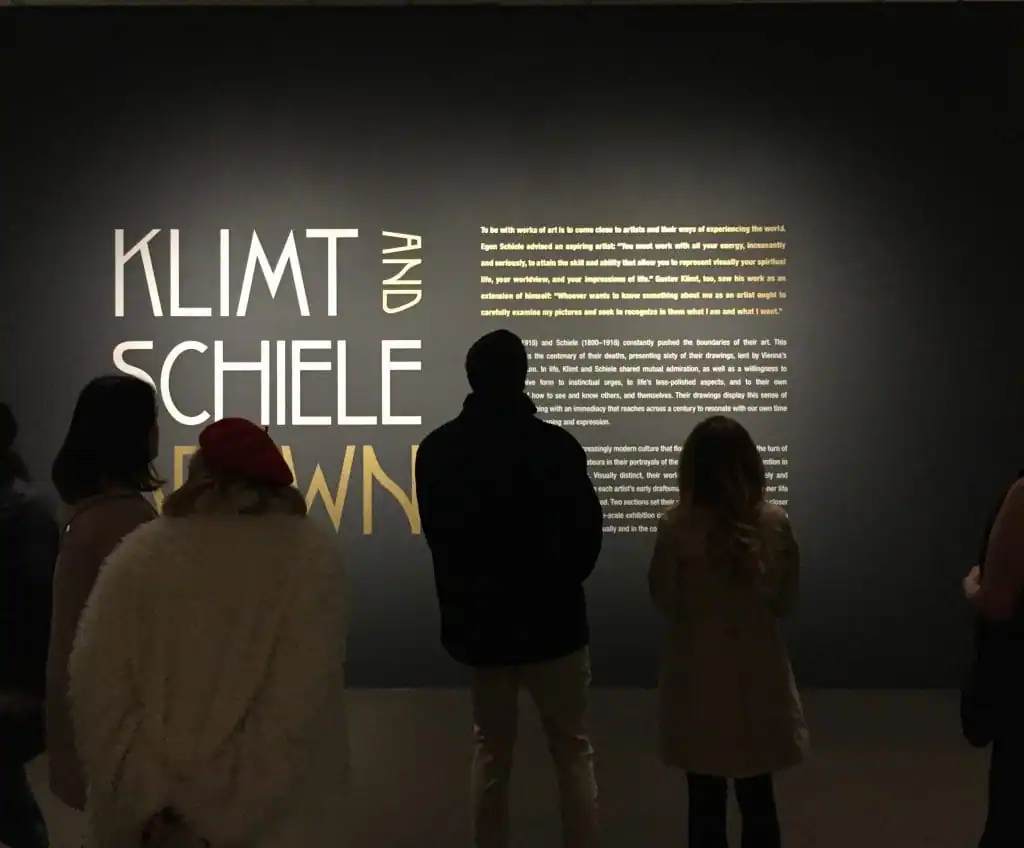
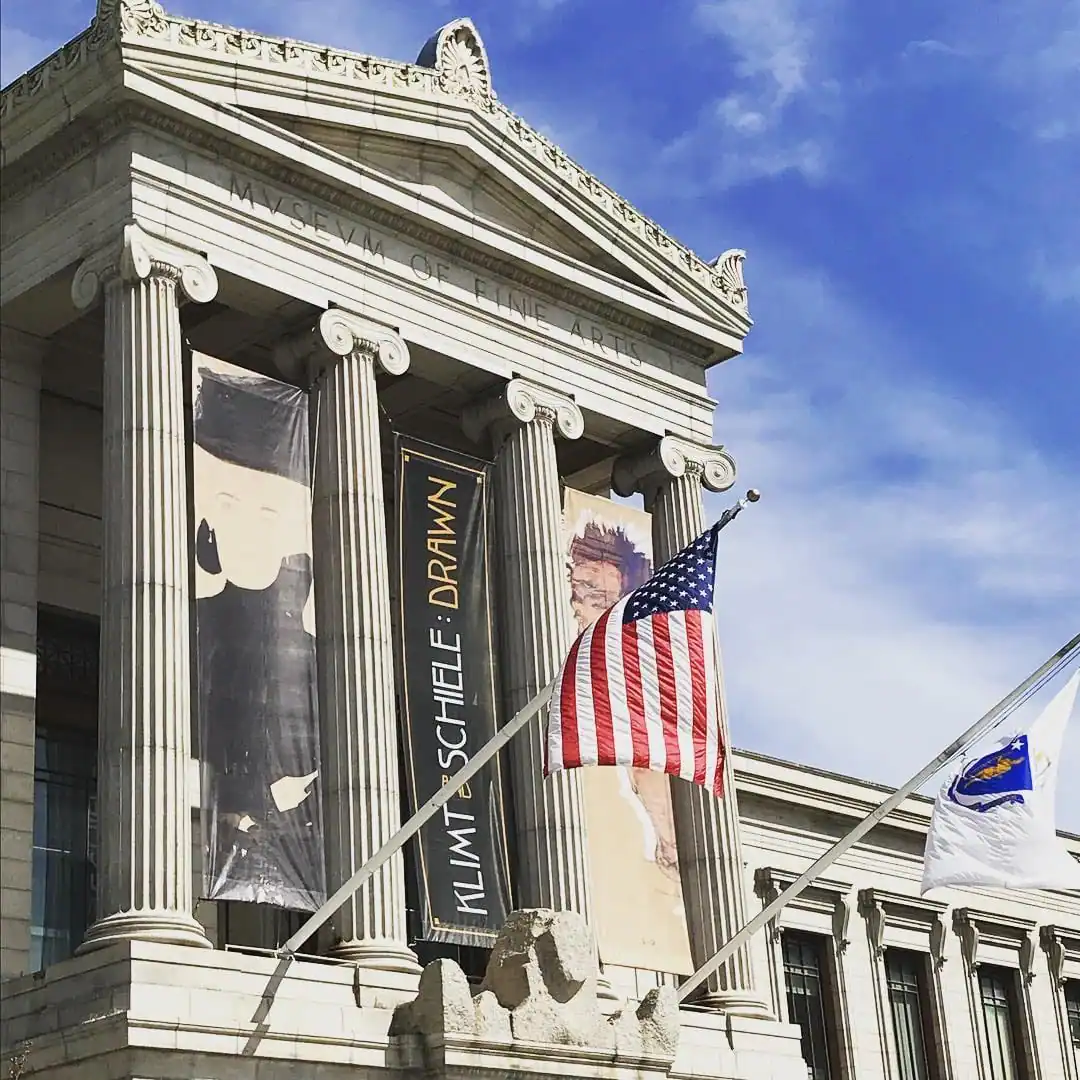
Photos: Museum of Fine Arts, Boston · Klimt & Schiele: Drawn, 2018.
Austria · 1897–1918
Vienna Secession
Turn-of-the-century Austrian Jugendstil — the Secession's geometric ornament, Klimt's gilded surfaces, and Habsburg-era travel graphics.
Typeface no. 01
Klimt
A display face inspired by the Vienna Secession and the geometric ornament of Gustav Klimt's 1902 Beethoven Frieze. Turn-of-the-century Austrian Jugendstil, translated to type.
Buy "Klimt"Typeface no. 02
Seebad Grado
Drawn from an Austro-Hungarian travel poster for the Adriatic resort of Grado. Elegant Secession-era letterforms from the twilight of the Habsburg Empire.
Buy "Seebad Grado"Central Europe
Other Central European faces
Additional display and text faces drawn from Moravian, Galician, and interwar Central European sources.
Typeface no. 01
Frolka
Named after Moravian painter and graphic artist Antonín Frolka. A Central European display face carrying the folk-modern spirit of the pre-war Slavic arts revival.
Buy "Frolka"Typeface no. 02
Mekicki
A serif face inspired by the work of Rudolf Mękicki, a Polish graphic artist and heraldist active in interwar Lwów. Classical proportions with an early-modernist edge.
Buy "Mekicki"Further reading
A History of Polish Art Deco Typography, 1908–1939
The artistic movements — Młoda Polska, Warsztaty Krakowskie, and the interwar Deco years — that gave rise to the letterforms behind Warszawa, Galicja, Pani Deco, and Secesja.